
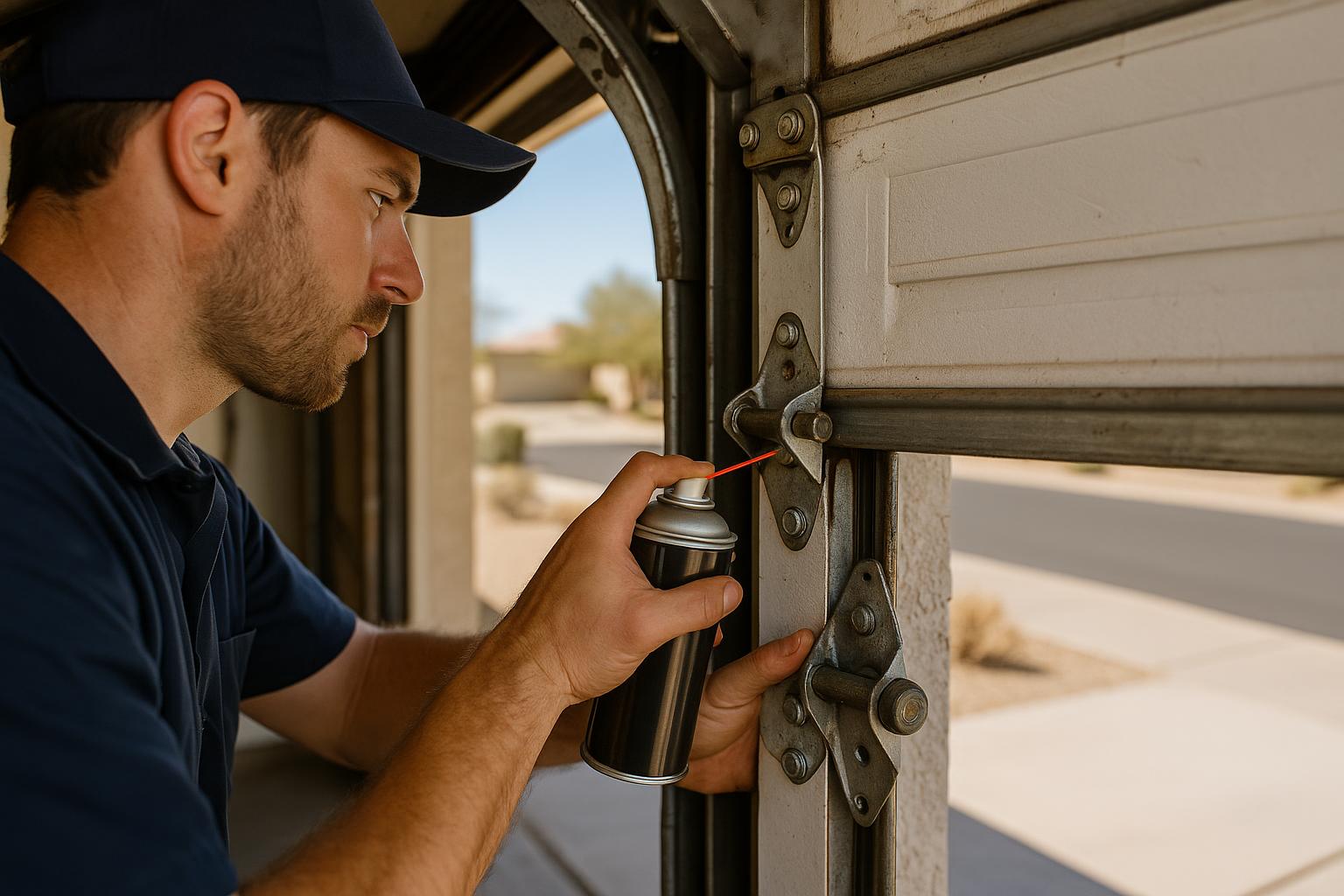
Your Garage Door Is the Hardest-Working Part of Your Home
Think about it — your garage door opens and closes an average of 1,500 times per year. That's more use than your front door, your back door, and probably every window in your house combined. Yet most homeowners in Victorville never give their garage door a second thought until it stops working, makes a terrible noise, or refuses to open on a Monday morning when they're already running late.
We get it. Garage door maintenance isn't exactly exciting. But here's the thing: a little routine attention can save you hundreds of dollars in emergency repairs and add years to the life of your door. At Victorville Garage Door Works, we see the consequences of neglected garage doors every single week — and most of those problems were completely preventable.
So how often should you actually service your garage door? Let's break it down.
The Short Answer: At Least Once a Year
At a minimum, your garage door should get a professional inspection and tune-up once a year. Think of it like an oil change for your car. You wouldn't drive 50,000 miles without one, and you shouldn't run your garage door through thousands of cycles without a checkup either.
If your door is older than ten years, or if you use it more than the average household — maybe you work from a home shop or have teenagers coming and going all day — twice a year is a better target.
Here in the High Desert, our climate adds another layer to consider. The extreme temperature swings between summer and winter in Victorville put extra stress on springs, weatherstripping, and metal components. A door that felt fine in April might start struggling by August when daytime temperatures push past 100 degrees.
What Does Garage Door Maintenance Actually Include?
When people hear "garage door maintenance," they sometimes picture someone just spraying WD-40 on a track and calling it a day. Professional maintenance is a lot more thorough than that. Here's what a proper service visit covers:
Visual Inspection
A technician will look over every component of your garage door system — the panels, tracks, springs, cables, rollers, hinges, brackets, and weatherstripping. They're checking for signs of wear, rust, fraying, cracks, or anything that looks like it's about to fail.
Lubrication
Moving parts need proper lubrication to reduce friction and prevent premature wear. This includes the springs, rollers, hinges, and bearing plates. And no, WD-40 is not the right product for most of these parts. A quality silicone or lithium-based lubricant is what your door actually needs.
Balance Test
Your garage door should be properly balanced so the opener isn't doing more work than it should. An unbalanced door puts enormous strain on the opener motor and can wear out springs faster. During a balance test, the technician disconnects the opener and manually lifts the door to see if it stays in place about halfway up. If it doesn't, adjustments are needed.
Safety Reversal Test
Every garage door opener manufactured after 1993 is required to have an auto-reverse feature. Your technician will test both the mechanical and photo-eye reversal systems to make sure they're functioning correctly. This is especially important if you have kids or pets.
Hardware Tightening
Vibration from daily use gradually loosens bolts, nuts, and brackets. A maintenance visit includes tightening all the hardware so everything stays secure and aligned.
Track Alignment Check
Even slightly misaligned tracks can cause your door to bind, make noise, or wear unevenly. Your technician will check that the tracks are plumb, level, and properly spaced.
What You Can Do Between Professional Visits
You don't need to be a garage door expert to keep an eye on things between annual service appointments. Here are a few simple things any homeowner can do:
- Listen for changes. If your door starts grinding, squealing, or popping when it didn't before, something has changed. Don't ignore new noises.
- Watch the door move. It should travel smoothly up and down without jerking, hesitating, or swaying to one side.
- Look at the springs and cables. You should never touch or adjust these yourself — they're under extreme tension — but you can visually check for obvious signs of rust, fraying, or gaps in the coils.
- Keep the tracks clean. Wipe down the inside of the tracks with a damp cloth a few times a year to remove dust and debris. Living in Victorville means dealing with desert dust and sand, which can build up faster than you'd expect.
- Test the auto-reverse. Place a roll of paper towels on the ground where the door meets the floor and close the door. It should reverse immediately upon contact. If it doesn't, call a professional right away.
What Happens When You Skip Maintenance
We're not trying to scare anyone, but we do want to be honest about what we see when maintenance gets ignored for years at a time:
- Broken springs. A spring that could have lasted 10,000 cycles with proper lubrication might snap at 6,000 without it. Spring replacement is one of our most common service calls in Hesperia, Apple Valley, and throughout the High Desert — and it's almost always more expensive than a simple maintenance visit would have been.
- Burned-out openers. When a door is unbalanced or has worn-out rollers, the opener motor has to work overtime. That extra strain shortens its lifespan significantly.
- Off-track doors. Loose hardware and misaligned tracks can eventually cause a door to jump off its tracks entirely. This is a safety hazard and usually requires an emergency repair call.
- Cosmetic damage. Rust, peeling paint, and cracked weatherstripping don't just look bad — they let moisture, pests, and extreme temperatures into your garage.
When to Call a Professional Between Scheduled Visits
Annual maintenance covers the routine stuff, but some situations call for immediate attention. Contact a garage door technician if you notice any of the following:
- The door won't open or close at all
- You hear a loud bang from the garage (this usually means a spring broke)
- The door is visibly crooked or sagging on one side
- Cables are hanging loose or look frayed
- The door closes but immediately reverses back up
- The opener runs but the door doesn't move
These are not DIY situations. Garage door components are under high tension and can cause serious injury if handled incorrectly.
Investing a Little Now Saves a Lot Later
A professional garage door maintenance visit typically costs a fraction of what a major repair runs. More importantly, it gives you peace of mind that the largest moving object in your home is safe and reliable.
At Victorville Garage Door Works, we make maintenance simple. We show up on time, inspect everything thoroughly, explain what we find in plain English, and only recommend work that's actually needed. We serve homeowners and businesses across Victorville, Hesperia, Apple Valley, Adelanto, Oro Grande, and Lucerne Valley.
If it's been more than a year since your last garage door service — or if you can't remember the last time anyone looked at it — give us a call. Your garage door works hard for you every day. A little maintenance goes a long way toward returning the favor.