
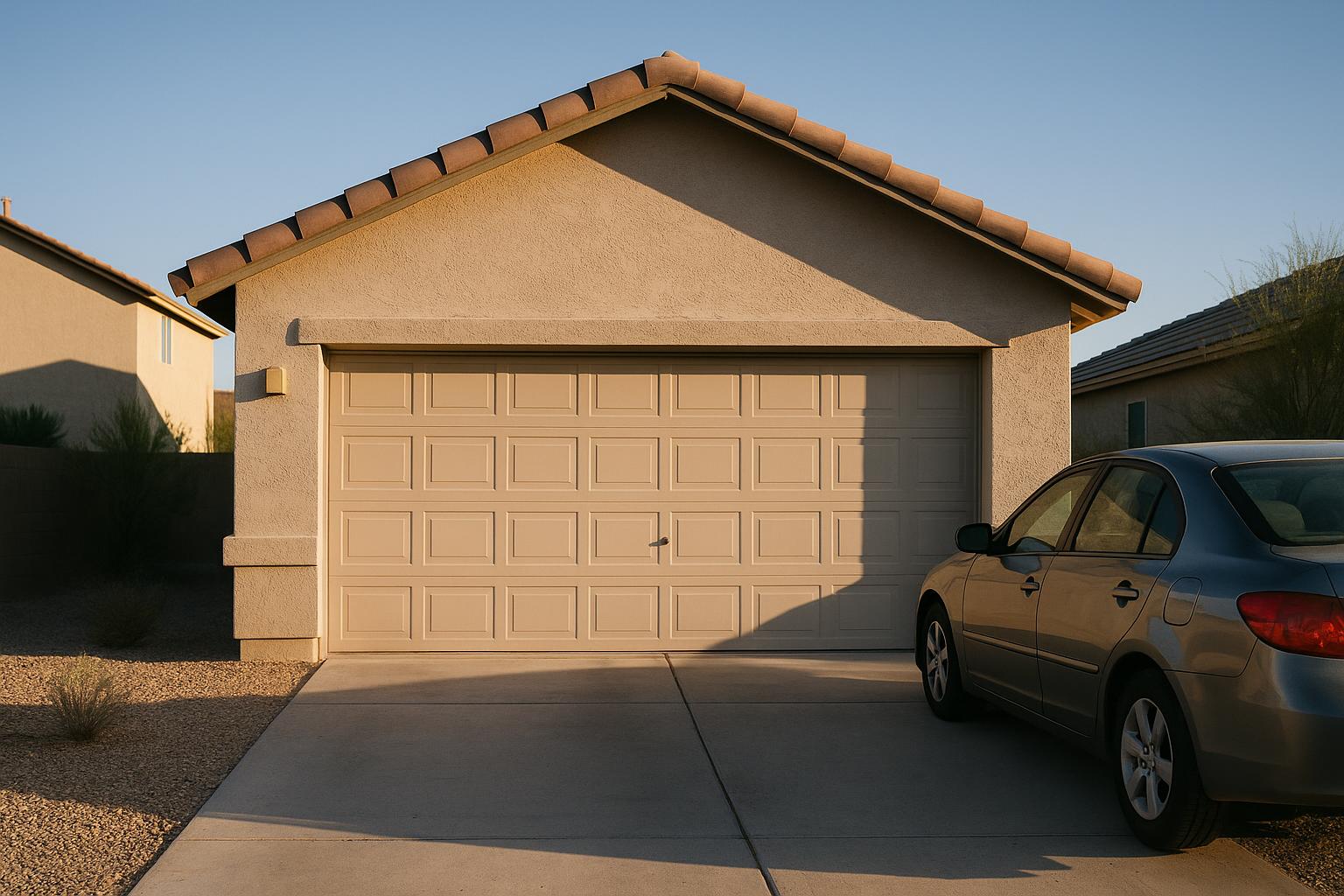
You're Running Late and Your Garage Door Won't Budge
It's 6:45 a.m. You've got your coffee, your keys, and exactly twelve minutes to get to work. You hit the garage door button and — nothing. Or maybe it groans, moves an inch, and stops. Few things are more frustrating than a garage door that refuses to cooperate when you're trying to start your day.
This is one of the most common calls we get at Victorville Garage Door Works, especially during the colder months. The good news is that most causes are straightforward, and some you can even troubleshoot yourself before calling a professional. Let's walk through the most likely reasons your garage door won't open in the morning and what you can do about each one.
Cold Weather and Your Garage Door
Living in Victorville and the surrounding High Desert, we deal with temperature swings that a lot of people don't expect. Daytime temps can be in the 70s or 80s, but overnight lows in winter can drop into the 20s and 30s. That kind of fluctuation takes a toll on your garage door system.
Here's how cold weather can cause problems:
- Metal contracts in the cold. Springs, tracks, and hardware all shrink slightly when temperatures drop. This can increase friction and make it harder for your opener to lift the door.
- Lubricant thickens. The grease on your springs, rollers, and hinges can become stiff overnight, creating resistance that your opener struggles to overcome.
- Weatherstripping sticks. The rubber seal at the bottom of your door can freeze to the concrete floor if there's any moisture present, essentially gluing your door to the ground.
If cold weather is the culprit, you'll usually notice the problem is worse on the coldest mornings and the door works fine by afternoon. Applying a silicone-based lubricant to your springs, rollers, and hinges before winter hits can prevent most of these issues.
Dead Batteries in Your Remote or Wall Button
It sounds almost too simple, but we'd be lying if we said this wasn't one of the top reasons people call us. Remote batteries die gradually, so the signal gets weaker over time until one morning it just doesn't reach the opener anymore.
Before you panic, try these quick checks:
- Replace the batteries in your remote — most use standard CR2032 coin batteries or AA batteries.
- Try the wall-mounted button inside the garage. If the door opens from the wall button but not the remote, the remote is the issue.
- If neither the remote nor the wall button works, check that the opener unit is plugged in and that the outlet has power. A tripped breaker or GFCI outlet is another surprisingly common cause.
The Door Is Locked and You Forgot
Many garage doors have a manual lock — a handle on the inside that slides a horizontal bar into the track. If someone in your household locked it manually, the opener will try to lift the door and fail because the lock bar is physically preventing movement. You'll usually hear the motor strain and then stop.
Check the lock handle on the inside of the door. If it's engaged, simply slide it back to the unlocked position. If this keeps happening accidentally, we can disconnect or remove the manual lock so it doesn't interfere with your automatic opener.
Your Opener's Safety Sensors Are Misaligned
Every modern garage door opener has two small sensors near the floor on either side of the door. These photoelectric eyes send an invisible beam across the opening, and if anything breaks that beam, the door won't close — and in some cases, it won't open properly either.
Sensors can get bumped by a bike, a trash can, or even a broom leaning against the wall. Dust and cobwebs can also block the lens. Check that both sensor lights are lit and steady (usually one green, one amber). If one is blinking, gently adjust it until the light holds steady, and wipe the lenses clean with a dry cloth.
Broken Springs — The Most Serious Cause
If you heard a loud bang from the garage — almost like a gunshot — sometime during the night, there's a strong chance one of your torsion springs snapped. A broken spring means the opener doesn't have the mechanical assistance it needs to lift the door, which can weigh 150 to 250 pounds or more.
Signs of a broken spring include:
- A visible gap in the spring above the door
- The door feels extremely heavy when you try to lift it manually
- The opener motor runs but the door barely moves or doesn't move at all
- The door opens a few inches and then stops
This is not a DIY repair. Garage door springs are under extreme tension and can cause serious injury if handled incorrectly. If you suspect a broken spring, leave the door alone and call a professional. Our team handles spring replacements throughout Victorville, Hesperia, Apple Valley, and the rest of the High Desert — usually the same day you call.
The Disconnect Switch Was Pulled
Your garage door opener has an emergency release cord — usually a red handle hanging from the rail. If someone pulled this cord (maybe during a power outage or by accident), the door is disconnected from the opener. The motor will run, but the door won't move because the trolley isn't engaged.
To reconnect it, simply pull the cord back toward the opener or press your wall button and let the opener run — the trolley should re-engage automatically on most models. If it doesn't click back into place, the trolley carriage may be worn out and need replacement.
Stripped Gears Inside the Opener
If your opener motor runs and you hear a grinding or whirring sound but the door doesn't move, the internal gears may be stripped. This is common in older chain-drive and belt-drive openers, especially if the door has been out of balance for a while and the motor has been working harder than it should.
Gear replacement is a repair we do regularly. In some cases, if the opener is more than 15 years old, it makes more sense to replace the entire unit with a newer, quieter, and more efficient model. We'll always give you an honest recommendation based on what actually makes sense for your situation.
When to Call a Professional
Some of the issues above — dead batteries, a locked door, sensor alignment — are things most homeowners can handle on their own. But if you're dealing with broken springs, a failing opener motor, stripped gears, or anything that involves the door's tension system, it's time to call in help.
At Victorville Garage Door Works, we show up on time, explain what's wrong in plain English, and fix the problem right. We serve homeowners and businesses across Victorville, Hesperia, Apple Valley, Adelanto, Oro Grande, and Lucerne Valley. If your garage door won't cooperate tomorrow morning, give us a call and we'll get you back on track — usually the same day.