
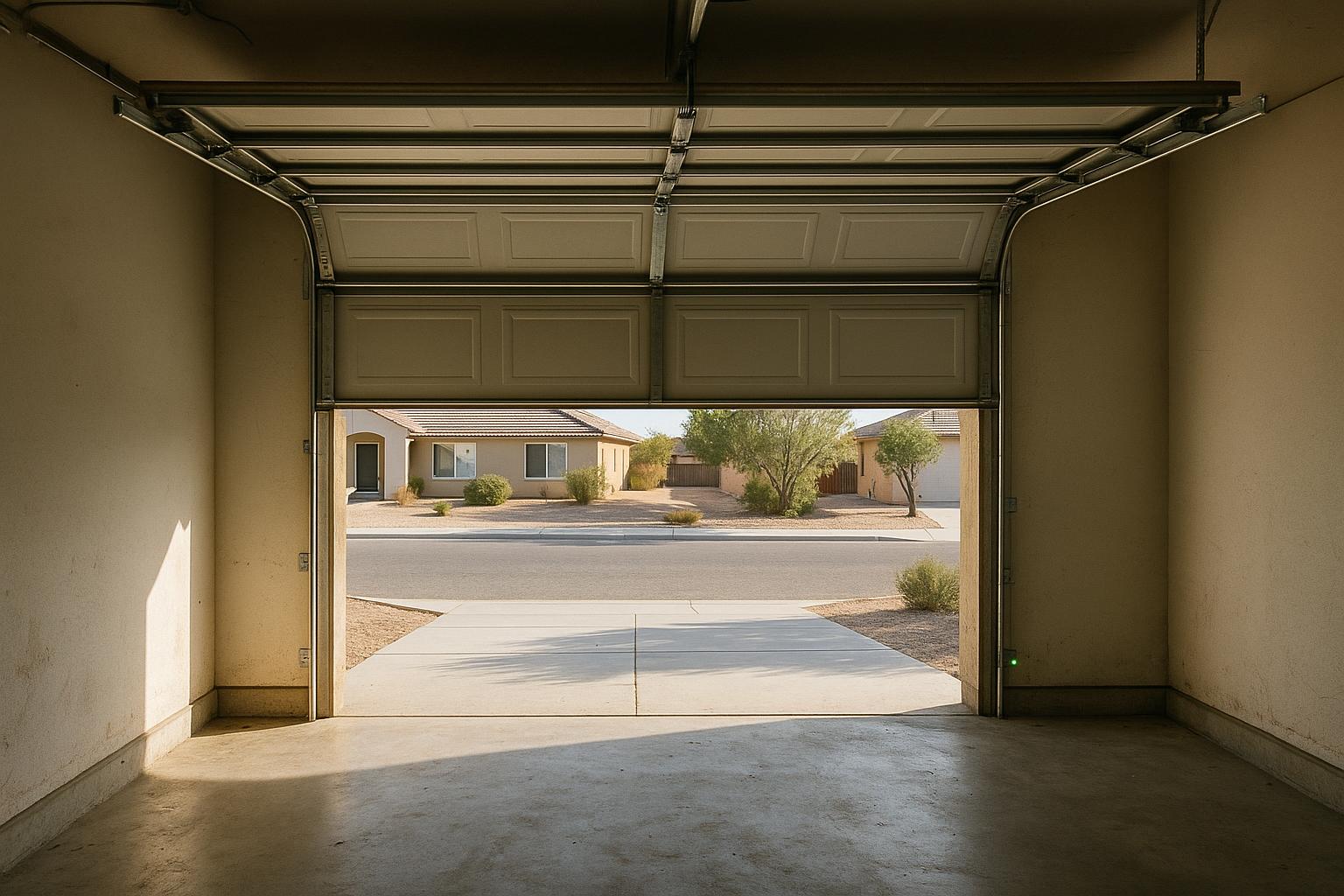
That Frustrating Moment When Your Garage Door Won't Stay Closed
You press the button on your remote. The garage door starts moving down. It gets about halfway — or maybe almost all the way — and then suddenly reverses direction and goes right back up. You try again. Same thing. Maybe you try holding the wall button, and it works, but the remote won't keep it closed.
This is one of the most common garage door complaints we hear from homeowners in Victorville, and it's understandably frustrating. You can't leave your garage open all night, especially during those cold High Desert winters or when you've got tools and belongings stored inside. The good news is that this problem usually has a straightforward cause, and most of the time it can be resolved without replacing the entire door or opener.
Let's walk through the most common reasons your garage door reverses before reaching the floor and what you can do about each one.
The Safety Sensors Are Misaligned or Blocked
This is the number one cause of a garage door that reverses on the way down. Every garage door opener manufactured after 1993 is required to have photo-eye safety sensors — two small devices mounted near the bottom of the door tracks on either side. They send an invisible beam across the opening, and if anything breaks that beam, the door reverses to prevent crushing a person, pet, or object.
Here's what can go wrong with the sensors:
- Something is blocking the beam. A broom, a box, a trash can, or even a cobweb can interrupt the signal. Check the area around both sensors and clear any obstructions.
- The sensors are misaligned. Over time, the brackets holding the sensors can get bumped or shift. If the two eyes aren't pointed directly at each other, the beam breaks and the door thinks something is in the way. Most sensors have a small LED light — if it's blinking instead of steady, alignment is likely the issue.
- The sensor lenses are dirty. Victorville gets its share of dust and wind, especially during spring. A layer of grime on the sensor lens can weaken the signal enough to cause intermittent reversals. Wipe both lenses with a soft cloth.
- Sun interference. In the afternoon, direct sunlight hitting one of the sensors can overwhelm the infrared beam. This is surprisingly common in our area given how much sun we get. A simple cardboard shade or repositioning the sensor slightly can solve this.
The Close-Limit Switch Needs Adjusting
Your garage door opener has limit settings that tell it how far the door should travel in both the open and close directions. If the close-limit is set too far, the opener thinks the door should keep moving even after it's already hit the floor. When the door meets resistance from the ground, the opener interprets that resistance as an obstruction and reverses.
On most openers, you'll find limit adjustment screws on the back or side of the motor unit. Turning the close-limit screw in small increments — usually no more than a quarter turn at a time — can fix this. Your owner's manual will show you exactly which screw controls the down limit. If you're not comfortable making this adjustment yourself, this is a quick fix for any garage door technician.
The Force Settings Are Off
Separate from the limit switches, your opener also has force settings that control how much resistance the motor will push through before reversing. If the close force is set too low, the door may reverse from normal friction in the tracks or even from its own weight.
This can happen after a seasonal temperature change. Here in Victorville, we go from triple-digit summers to freezing winter mornings, and that temperature swing affects the lubrication in your tracks and the flexibility of your weatherstripping. What worked fine in July might cause problems in December.
Adjusting the force setting is similar to adjusting the limit — small turns of a screw on the motor unit. But be cautious: setting the force too high defeats the purpose of the safety reverse feature. The door should reverse when it meets real resistance, like a child's bicycle in the doorway. If you're unsure, it's better to have a professional calibrate it properly.
Worn or Damaged Tracks and Rollers
If your tracks are bent, dented, or clogged with debris, the door can bind or stick as it moves down. The opener senses that extra resistance and reverses. Similarly, worn-out rollers — especially old steel rollers without bearings — can create enough friction to trigger a reversal.
Take a look at your tracks from inside the garage. They should be smooth, straight, and free of obstructions. Check the rollers too — if they're visibly worn, cracked, or no longer spinning freely, it's time for a replacement. Nylon rollers with sealed bearings are a popular upgrade because they're quieter and last longer, which is a nice bonus for homes where a bedroom sits above or next to the garage.
Broken or Worn Springs
Your garage door springs do the heavy lifting — literally. They counterbalance the weight of the door so the opener doesn't have to work as hard. If a spring is weakening or has partially broken, the door becomes much heavier for the opener to move. The motor strains, hits its force limit, and reverses.
You might notice the door feels heavier if you try to lift it manually, or you might hear unusual creaking or popping sounds. Spring replacement is one repair we always recommend leaving to a professional. These springs are under extreme tension and can cause serious injury if handled incorrectly. Our team at Victorville Garage Door Works handles spring replacements regularly and can typically complete the job in under an hour.
Wiring Issues
Less common but still worth mentioning: damaged wiring between the opener and the safety sensors can cause erratic behavior, including random reversals. Rodents, lawn equipment, and general wear can damage the low-voltage wires that run along the ceiling and down the walls to the sensors. If you've checked everything else and the problem persists, inspect the wiring for visible damage, bare spots, or loose connections at the sensor terminals.
When to Call a Professional
Some of these fixes — cleaning sensors, clearing obstructions, wiping dust off lenses — are perfectly safe to do yourself. Others, like adjusting force settings, replacing springs, or diagnosing electrical issues, are better handled by someone with experience.
If your garage door keeps reversing and you've tried the basic troubleshooting steps without success, give us a call. At Victorville Garage Door Works, we serve homeowners throughout Victorville, Hesperia, Apple Valley, and the surrounding High Desert communities. We'll diagnose the problem, explain what's going on in plain English, and get your door closing properly again — usually in a single visit.
A garage door that won't close isn't just an inconvenience. It's a security risk and an energy waste, especially during our extreme summer and winter temperatures. Don't let a small issue turn into a bigger problem. Most reversing issues are affordable to fix when caught early.